
We have all seen the scene in the heist movie: the master thief puts a stethoscope to the safe door, spins the dial with sweaty fingers, hears a click, and the heavy door swings open. It makes for great cinema, but in the real world of Warwick security, opening a locked safe is far more technical and far less dramatic.
Whether you have inherited an antique safe from a relative, lost the combination to your business vault, or have a modern digital safe with a fried circuit board, the panic of being separated from your valuables is real. However, treating a safe like a standard lock—or worse, trying to pry it open with a crowbar—is a recipe for disaster. Understanding the complexity of safe ratings and locking mechanisms is the first step to regaining access without destroying what’s inside.
Fire Safes vs. Burglary Safes: Knowing the Difference
One of the most common misconceptions we encounter is the belief that all safes are created equal. They are not. A “fire safe” bought at a big-box store is designed to keep paper documents from burning for 30 to 60 minutes. It is constructed with thin sheet metal and a moisture-releasing composite liner. It is not designed to stop a burglar with a pry bar or a drill.
On the other hand, a “burglary safe” (often bearing a UL rating like TL-15 or TL-30) is a fortress. These are built with thick steel plates, concrete amalgamate, and glass “relockers”—traps that permanently lock the safe bolts if someone tries to drill into it. Knowing which type you have is crucial for a locksmith. Using a drill on a safe equipped with glass relockers without knowing exactly where to drill will result in the safe “locking up” completely, turning a difficult job into a near-impossible one. Resources like Underwriters Laboratories (UL) provide detailed explanations of these ratings, which are essential for insuring high-value items like jewelry or cash.
The Art of Manipulation and Precision Drilling
When a combination is lost, the goal of a professional safe technician is “opening with repairability.” We want you to be able to use the safe again.
For mechanical dial locks, we sometimes use manipulation. This is the real-world version of the movie trope, using tactile sensitivity to map the internal wheel pack. It is non-destructive but time-consuming. For electronic failures or high-security malfunctions, we use precision drilling. This is not brute force. We use diamond-tipped bits and fiber-optic scopes to drill a tiny hole at a mathematically calculated point on the safe face. This allows us to trigger the release mechanism manually. Afterward, the hole is filled with a tapered steel pin and welded shut, often leaving the safe stronger than it was before. Enthusiast groups like the Safe and Vault Technicians Association (SAVTA) maintain the strict ethical and technical standards required for this work.
Digital Safe Failure: When the Batteries Die
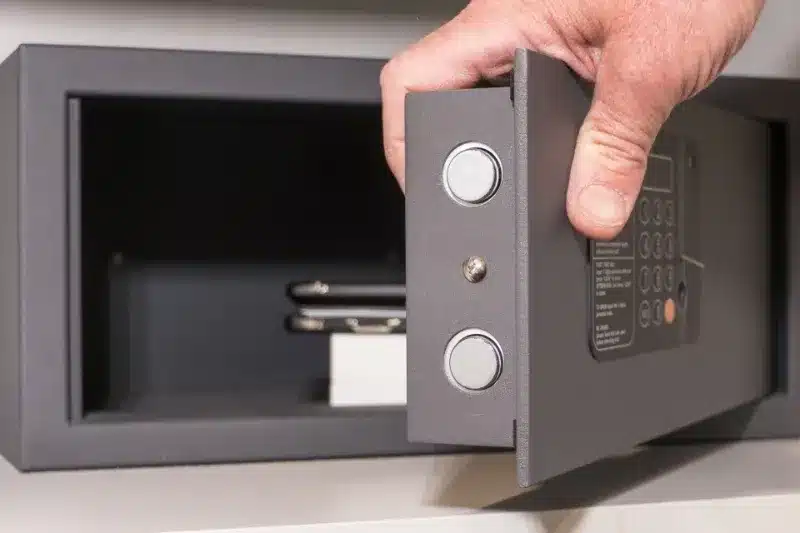
The most common service call we receive in Warwick is for electronic keypad safes. These offer great convenience, but they are prone to failure. Moisture, battery leakage, or simple solenoid burnout can leave you locked out even if you know the correct code.
Many owners panic and try to cut the safe open with an angle grinder. This generates heat that can damage the documents or electronics stored inside. A professional can often bypass the electronic lock using a “try-out key” or by spiking the solenoid through the mounting holes, popping the safe open in minutes with zero damage to the contents.
Your Warwick Experts for Safe Locksmith Services
When your valuables are held hostage by a stubborn lock, you need a specialist, not just a handyman. We possess the specialized drilling rigs, scopes, and charts required to open everything from home fire boxes to commercial bank vaults. Trust Top Lock and Garage to handle your sensitive assets with discretion and skill. Learn more about our specialized Safe Locksmith capabilities or request service via our Contact Us page.