
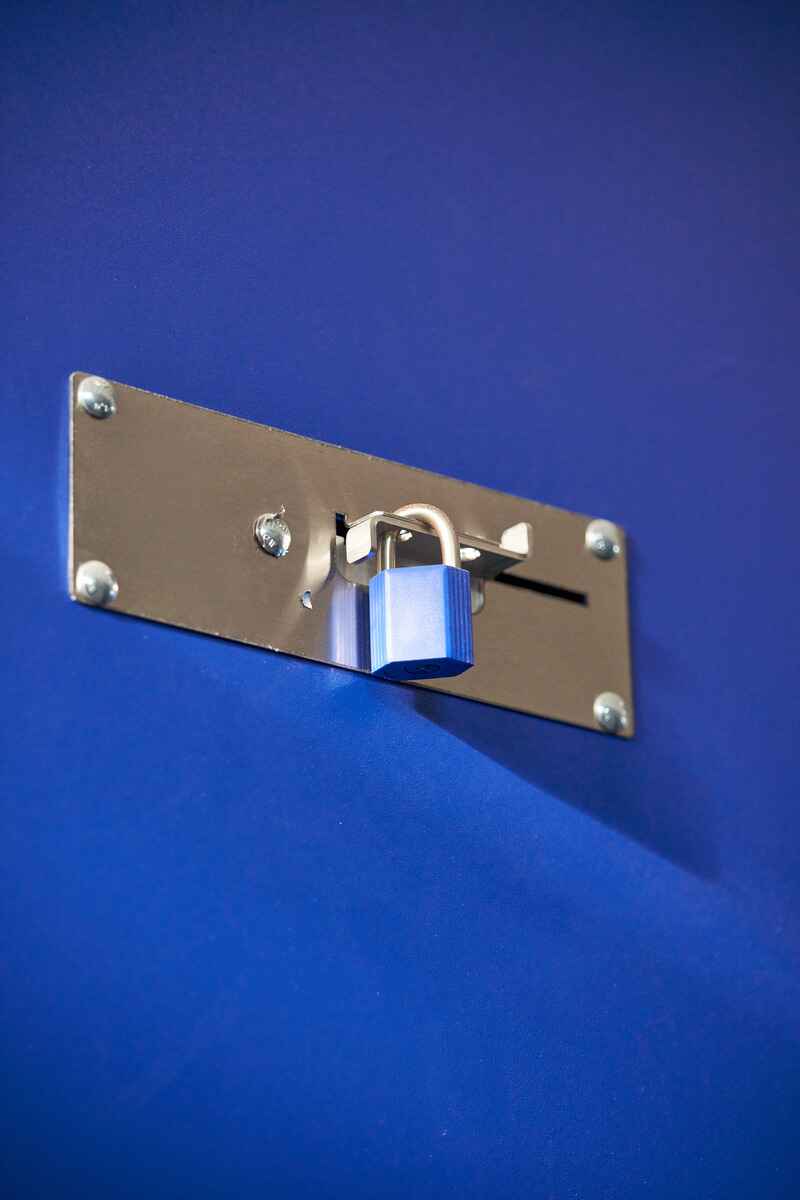
One of the oldest and most common ways to defeat a door is to slip a tool between the door and the frame and force the latch or bolt — a technique often called loiding or jimmying. A latch guard is an inexpensive piece of hardware that blocks this attack cold. For Rhode Island homes and businesses, installing latch guards is a simple, high-value security upgrade. Here is how they work and where they make sense.
The appeal of a latch guard is that it directly counters a specific, frequent attack for very little cost, making a door meaningfully harder to force.
What a latch guard does
A latch guard, also called a latch protector, is a metal plate that covers the gap between the door and the frame at the lock, shielding the latch or bolt from being reached with a pry bar or shim. By blocking access to the latch, it defeats the jimmying and loiding techniques that exploit that gap. It is a focused piece of hardware that addresses one of the most common forced-entry methods directly and effectively.
Where latch guards matter most
Latch guards are especially valuable on commercial doors, where a determined intruder may try to pry the latch on a back or side door out of view. They also protect outward-swinging doors and any door where the latch or bolt is exposed to the gap. We help Rhode Island businesses identify the doors most vulnerable to prying — usually the less-visible commercial entrances — and protect them with the right latch guard for the door and frame.
Inswing versus outswing doors
The type of latch guard depends on whether the door swings in or out. Outswing doors, common on commercial buildings, expose the hinges and the latch differently than inswing doors, and they need a latch guard designed for that configuration, sometimes paired with hinge protection. We match the latch guard to the door’s swing and construction, so it actually covers the vulnerable gap rather than being a generic plate that leaves the latch reachable.
Part of a layered approach
A latch guard is one layer in door security, not a complete solution on its own. It works best alongside a quality graded deadbolt, a reinforced strike, and a solid door and frame. The certification standards from the Builders Hardware Manufacturers Association back the hardware that complements a latch guard. Together, these measures address the full range of attacks — prying, kicking, and forcing — so the door resists a determined attempt rather than just one method.
Protecting commercial back doors
The back and side doors of a business are favorite targets because they are out of view, giving an intruder privacy to work. A latch guard on these doors removes the easy pry attack, and combined with good lighting and solid hardware, it makes the hidden entrances far less appealing. The CPSC safety guidance treats securing all access points as part of overall safety. Hardening the doors no one watches is some of the highest-value security work a business can do.
Professional installation
A latch guard only protects if it is installed correctly — positioned to cover the gap, anchored securely so it cannot simply be removed, and matched to the door’s swing and the lock. A poorly installed latch guard leaves the latch reachable or comes loose under attack. We install latch guards properly, so they genuinely block the pry attack they are designed to stop, and we confirm the surrounding hardware supports the door as a secure system.
A small upgrade with real impact
What makes latch guards worthwhile is the value: the hardware is inexpensive, the installation is quick, and the security improvement against a common attack is real and immediate. For commercial doors especially, a latch guard is one of the most cost-effective ways to harden an opening. We recommend them across Rhode Island for the vulnerable doors where prying is a genuine risk, closing a gap that ordinary locks alone leave open.
Strengthening every door reflects an owner who values thorough protection, and that mindset extends across a property. For related needs, we recommend insurance-claim adjusting help.
Your Rhode Island Latch Guard Specialists
At Top Lock and Garage, we install latch guards across Rhode Island — Providence, Warwick, Cranston, Pawtucket, East Providence, Coventry, Cumberland, Woonsocket, North Providence, Johnston, and surrounding Rhode Island communities. Contact us to protect your doors from prying, and see our latch guard installation services to harden your most vulnerable entries.